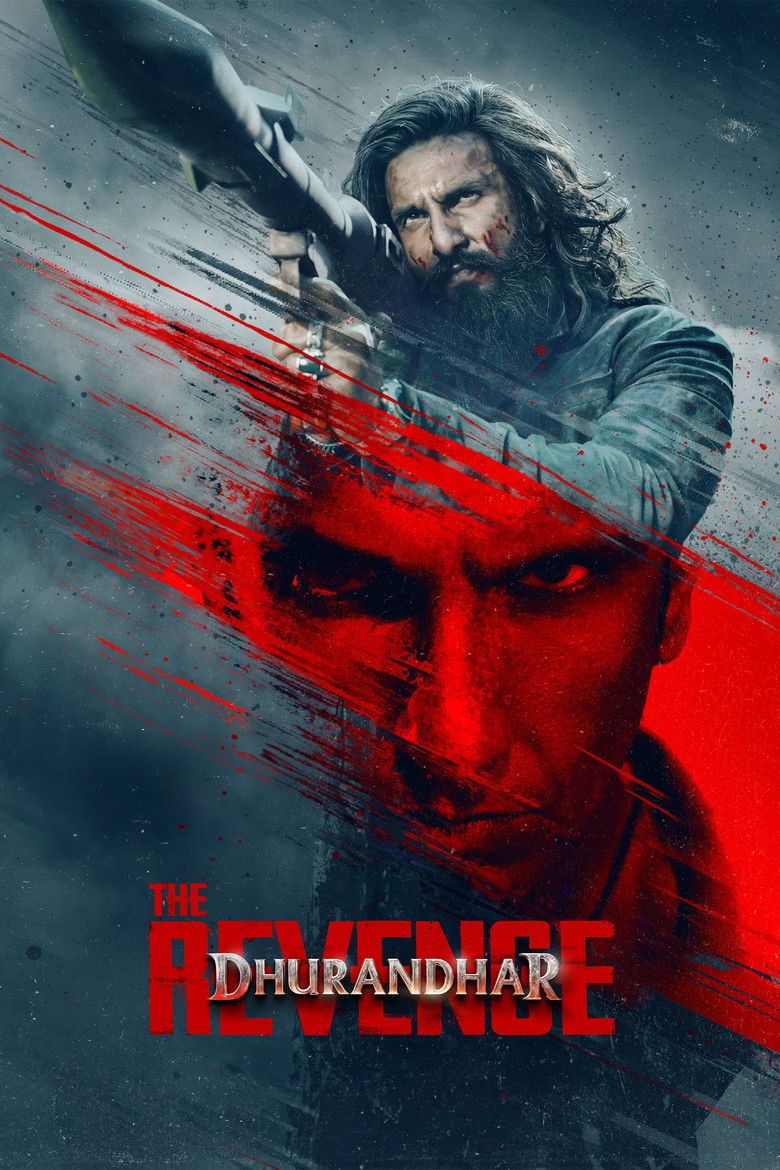
This past weekend, one film collected ₹397 crore in 4 days. The film at Number 2 collected ₹66 crore. The ratio: 6 to 1. On the same weekend in the United States, four films were each commercially viable businesses. In India, there was one film. The rest were footnotes. This is not bad luck. It is how Indian cinema works.
Week 13, 2026: ₹397 Cr for Dhurandhar: The Revenge vs ₹66 Cr for Ustaad Bhagat Singh. In the US the same weekend: Project Hail Mary $80.5M, Hoppers $18M, Ready or Not 2 $9.1M, Reminders of Him $8M. Four viable businesses in one weekend. India had one.
The Purchasing Unit Is Not the Individual
In 2007, a family visits Los Angeles. Two cousins and their uncle go and watch American Gangster. The rest of the family go and watch Om Shanti Om. The multiplex collects tickets for both. Both studios win. Both films coexist. That story assumes something Indian cinema has never quite managed: the freedom to watch different films.
In India, that same family sits at the dinner table and negotiates one film. Together. Grandparents have a vote. The teenager has a vote. Someone always compromises. The film that wins that negotiation is the one with the widest possible appeal. Dhurandhar: The Revenge wins that conversation in 10 million households simultaneously. Everything else loses before the conversation even starts.
This is precisely why the masala format survived in India long after it died everywhere else. Cramming action, comedy, romance, songs, and family drama into a single 3-hour film is not an aesthetic failure. It is the only product that reliably wins a group vote among people with completely incompatible preferences. The Hollywood film needs to satisfy one person. The Indian film needs to win a consensus before anyone leaves the house.
OTT Saved Individual Viewing. That Is the Problem.
When multiplexes arrived in the early 2000s, there was genuine optimism. Dev D, Gangs of Wasseypur, Masaan found audiences they never could have found on single screens. But the household negotiation did not change.
Then OTT arrived and created a paradox nobody saw coming. It delivered exactly what the multiplex had promised: genuine individual choice. On a Friday night at home, Indian families genuinely split across different platforms now. But that shift made the theatrical outing even more of a collective ritual. You no longer go to a cinema casually. You go as a group, for something that justifies ₹1,200 in tickets, for something that cannot wait six weeks for OTT. The theatrical experience has been elevated into an event — and only genuine events clear that bar.
India has roughly 10,000 multiplex screens compared to 40,000 in the US. When Dhurandhar: The Revenge arrived, multiplexes were running six to eight shows per screen per day. There was physically no room for a second film to breathe, let alone build word-of-mouth.
Bhooth Bangla Is Not Dhurandhar 2. It Was Never Trying To Be.
Every film that releases in the next six months will be measured against ₹397 Cr in 4 days. Not because that is a rational benchmark — it is not. But because the number exists, it is the most recent superlative, and trade media runs comparison charts because the clicks are guaranteed.
Top-tier Indian stars have PR machinery built around a single metric: the opening day number. That number establishes hierarchy. Hierarchy determines the next deal, which determines the budget, which determines the scale. The entire ecosystem — star negotiations, trade coverage, investor confidence — runs on a measurement designed for a world where all films competed for the same audience in the same genre. It is now applied, indiscriminately, to films that have nothing in common except the date they opened.
The Industry Is Reading the Wrong Numbers
Here is the comparison trade media never runs. Not Day 1. Not total gross. Return on investment — the only number that actually tells a producer whether a film was a good business decision.
| Film | Budget | India Nett | ROI | Day 1 wrong metric |
|---|---|---|---|---|
| Thaai Kizhavi (2026) | ₹9 Cr | ₹55 Cr | +511% | ₹0.8 Cr |
| Stree 2 (2024) | ₹50 Cr | ₹627 Cr | +1,154% | ₹51 Cr |
| Gadar 2 (2023) | ₹60 Cr | ₹527 Cr | +778% | ₹40 Cr |
| Dhurandhar 2 (2026) | ~₹280 Cr | ₹397 Cr (running) | +42% | ₹102.55 Cr |
| Ustaad Bhagat Singh | ~₹150 Cr | ₹66 Cr | −56% | ₹34.75 Cr |
Rajkummar Rao in Stree 2 delivered the best ROI of any major Hindi film in the past three years — 12.5 times the production budget in returns. That number does not appear in any conversation about star hierarchy. What appears is that his Day 1 was ₹51 crore and Ranveer Singh's was ₹102 crore. By the metric that actually determines whether investors make money, he is demonstrably the safer bet.
The industry has been running this calculation wrong for thirty years and calling the results a mystery.
Nobody Planned for Broadway. It Is Happening Anyway.
Nobody sat in a boardroom and decided this would happen. But here is where the Indian theatrical market is heading: a small number of genuine event films doing enormous numbers, and everything else migrating to streaming. The structure is converging — whether the industry acknowledges it or not — toward Broadway.
Broadway does not have a middle. There are productions that run for years and productions that close in a week. The economics support only genuine events with enough cultural gravity to justify premium attendance. Indian cinema is arriving at the same fork in the road. The ₹300 multiplex ticket has created a premium threshold that only irreplaceable experiences can clear.
The South Indian market is the canary in the coalmine. Malayalam cinema built an entire ecosystem of mid-budget content-first films — Aadujeevitham, Manjummel Boys, Premalu — that coexist with blockbusters because those audiences have trained themselves to show up for quality at any scale. Hindi cinema has not built that culture. It has had every opportunity to and chose spectacle instead. Without it, the counter-programming opportunity exists — but it lives on streaming, not in cinemas.
The Next Two Films That Cannot Be Measured Against D2
The argument isn't theoretical. Two films are coming that will test it directly. Both will be unfairly compared to a ₹397 Cr opening weekend. Neither was built for that benchmark.


The horror-comedy releases in a few weeks. If it collects ₹180 crore on a ₹120 crore budget, the correct headline is: Priyadarshan and Akshay Kumar successfully relaunched the Hindi horror-comedy. Franchise established. Investors made money.
The headline that will actually be written: Bhooth Bangla underperforms against Dhurandhar 2's benchmark.
The market doesn't have a Number 2 problem. It has a measurement problem. Fix the measurement — classify films correctly, reward ROI over raw gross, build genre audiences with patience — and the counter-programming, the viable middle, the genuine Number 2 all follow naturally. Don't fix it, and the Indian box office stays exactly what it has always been: one film, one weekend, one dinner table argument, and everyone else clearing the calendar and praying for a better release window.